I
The French Academy in Rome
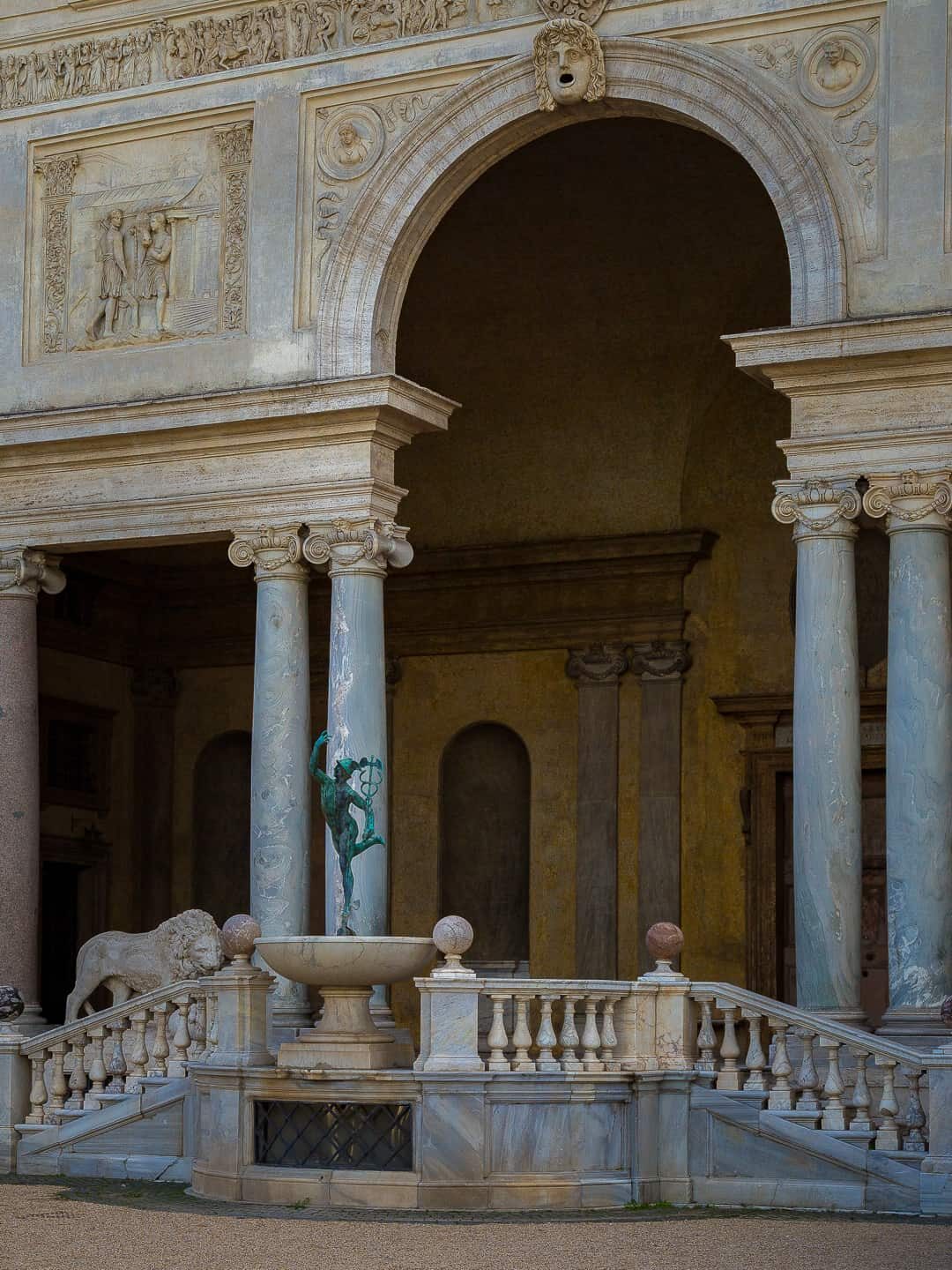
On the Pincian hill above the Spanish Steps, the Villa Medici raises its twin-towered façade. Cardinal Ferdinando de’ Medici bought it in 1576 and turned it into the setting for his collection of antiquities: Roman reliefs, statues and sarcophagi were set into the garden façade, which became a true page of archaeology in the open air.
Towards the city the villa presents an almost bare wall; towards the gardens it opens into a bright loggia, adorned with garlands and antique figures. It is one of the earliest of those pleasure houses in which sixteenth-century Rome reinvented the art of living between architecture, sculpture and nature.
In 1803, by Napoleon’s decree, the villa became the seat of the French Academy in Rome, founded in 1666 by Louis XIV and Colbert. The laureates of the Prix de Rome stayed here to perfect their art in contact with Antiquity and the Renaissance: they drew the ruins, copied Raphael, modelled from the antique.
The place has seen the greatest pass through: Galileo was received here in 1630, a guest of the Medici; Ingres and later Balthus were among its directors. For three centuries the Villa Medici was the dream and the reward of France’s artistic youth.