III
The Renaissance gardens
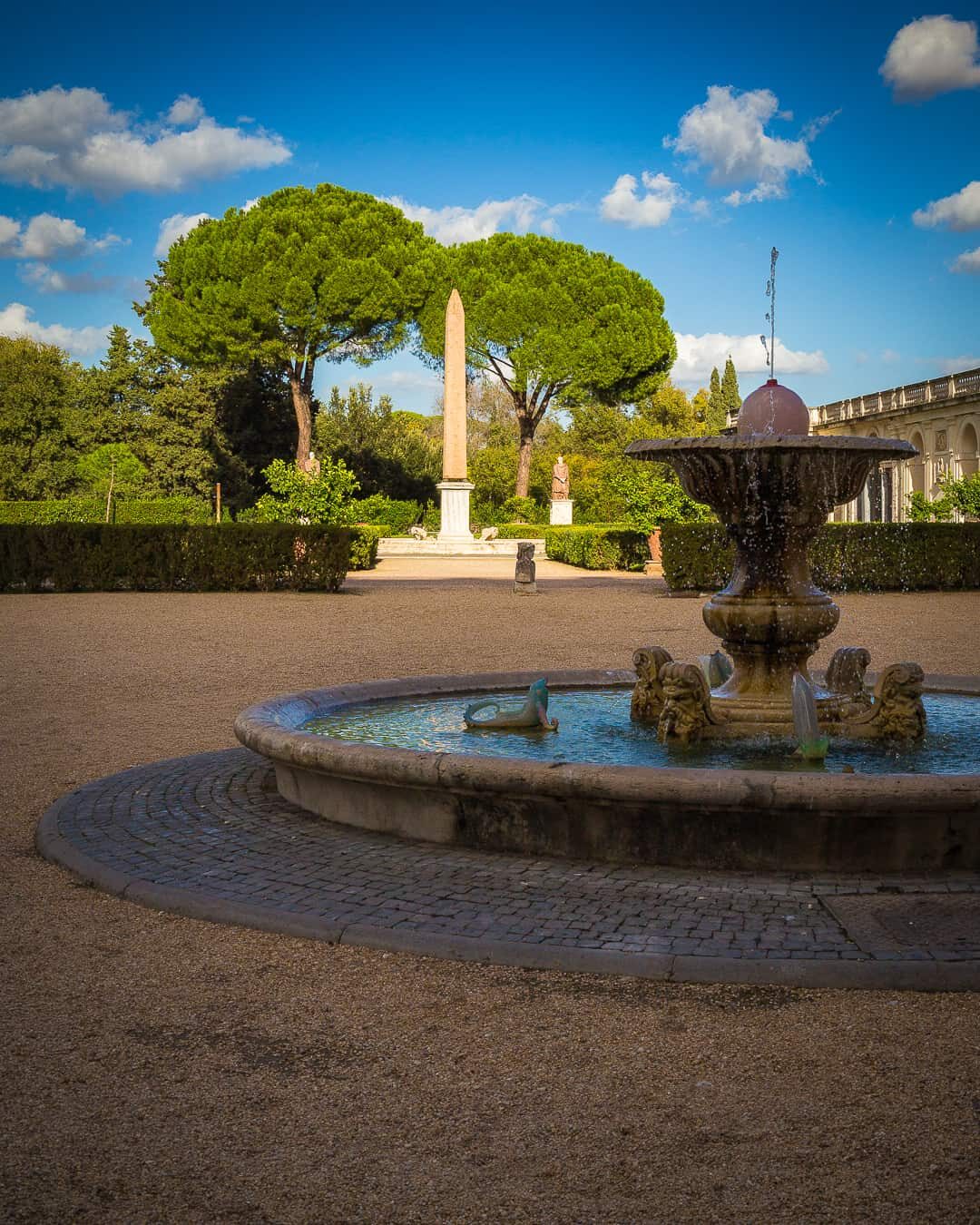
Behind the villa lies one of the finest gardens in Rome: sixteen squares of clipped box, edged with tall laurel hedges and punctuated by umbrella pines and antique statues. An Egyptian obelisk once marked its centre — today a copy, the original having left for Florence in 1790.
The garden is conceived as a series of open-air rooms: regular parterres near the villa, then the wild Bosco of holm oaks, and finally Mount Parnassus, an artificial mound crowned by a little temple. Fountains, basins and water-games set its rhythm.
Here one meets Giambologna’s Mercury, the group of the Niobids struck by the arrows of Apollo and Diana, the busts of emperors and the herms lining the walks — all copies of the antiquities the Medici collected and which are now in the Uffizi.
Masks, marble lions, sarcophagi and columns rise among the ivy: the garden is itself a museum. At its far end, between the trees, opens the loveliest view over the domes of Rome.